Back-to-back Dickinson blogposts, whaaaat?!?!
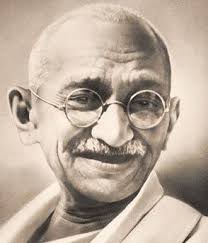
This lovely poem includes paradoxes, and thus I shall be addressing question 13 with this post. The first line itself is, in fact, a paradox. Madness is equated with Sense, literally lacking sense is compared to having sense. The rest of the poem then sets forth to explain this stark contrast that the speaker sets forth. The speaker goes on to explain that anyone that blindly follows the majority would be considered sane by society, but insane for lacking the ability to think and form opinions independently. Conversely, anyone who goes against the viewpoint of the crowd is deemed insane by society, but is perfectly sane in the sense that they have this ability to form coherent thoughts and opinions on their own without having to borrow ideas others. However, that is not the end of the speaker's rant. The last line adds an entirely new dimension to the argument. The speaker notes that those who go against the majority are not just deemed insane, but actually dangerous, and are "handled with a chain." This last line criticizes one particularly aspect of society that the speaker finds particularly upsetting. It is not enough that society deems free thinkers as insane, but they are actually considered dangerous, and their ideas are held back--chained, if you will--and their potentially beneficial insights are opposed simply because they are different. Reminds me a bit of this guy:
Showing posts with label Paradox. Show all posts
Thursday, September 23, 2010
Thursday, August 12, 2010
Twelve - Gone Fishin'
I have come to the conclusion that Ernest Hemingway likes fishing. This is one of the nicest, most peaceful chapters in the book, and I doubt it's a coincidence that it focuses primarily on fishing. This is also possibly the first chapter in which the characters do not actually get straight-up staggering-home drunk. A little buzzed perhaps, but not that bad. It's kind of nice (although I must admit that generally on a fishing trip, the opposite is supposed to happen;. Perhaps that's some kind of paradox?). It has really been the first time that Jake has been able to relax throughout the course of the entire novel. Usually, he's running around from bar to bar, always moving, always talking to people, dancing on occasion, always up and active. However, when he goes fishing with his good buddy Bill, he seems extremely chilled out. I think this is particularly well-portrayed through his personal choice of fishing method. Rather than partaking in the mildly more active fly fishing method like Bill, he just drops some worms in the water and sits around until he gets a bite. I personally find it intriguing that Jake also catches more fish through the chilled-out method than Bill catches through the active "I'm gonna lasso a fish" method (note: fly fishing does not actually involve lassoing fish. It just looks like it sometimes). I think Hemingway is saying that in life, sometimes it's more effective to sit down, chill out, and just let things happen, as opposed to chasing issues down and solving them by any means necessary. Enough about fishing, let's discuss that deep ManTalk Jake and Bill share.
Bill and Jake are able to talk more openly with each other than any other two characters in the novel. The brief discussion of Jake's accident serves as essentially the basis for the whole "Jake-can't-do-the-nasty" theory that resonates throughout the course of the novel. So it's kind of important. Bill starts taking cracks at him, saying "another group claims you're impotent" (p. 120). Jake naturally denies this, but then starts to worry that Bill might feel bad about that last little jive. I think that there really wouldn't be any point for Jake to feel bad if there wasn't any truth to the joke. So he tries to salvage the conversation and make a little running joke out of it, leading into some fun stories about a fellow on a horse. Or maybe it was a tricycle. Anyway, the point is that the subject of impotence pops up way too many times in this book for it not to apply to Jake. Hemingway isn't the sort of person to just drop something like that and not have any meaning behind it. He never outright says it, but at this point, I'd say it's undeniable. However, Bill, being the nice guy that he is, decides to try to salvage his buddy's masculinity. He tells him he's a "hell of a good guy" (p. 121). I interpret this to essentially mean "I still think you're a man, even if your parts don't work." What a good friend. Then the conversation rolls into homosexuality causing the Civil War. Not true in the slightest, obviously, but I think that Bill mentions this to sort of reinforce that earlier theme of losing sight of what's masculine. Essentially, I think Bill is just trying to say that he loves Jake, but in a purely heterosexual and bromantic fashion. Long story short, Bill and Jake are best buddies, but they're not gay, no matter what those folks in New York might say.
Thursday, July 8, 2010
Twenty - The Lives of the Dead
The first thing I noticed about this chapter was the apparent paradox that popped up in the Title, "The Lives of the Dead." Dead people are dead, not alive, so how can they have lives? O'Brien means that through dreams and stories, people who have already died can, in a way, come back to those who are still thinking of them. O'Brien demonstrates this concept several times in this chapter, first with the "funeral" for the dead man in the village, and then the conversation with Ted Lavender's corpse, and then the dreams with Linda. And that's what O'Brien is trying to do with this chapter, and perhaps with this entire book. Just like how he says "I want to save Linda's life--not her body, her life" (p. 223). That's what he's really trying to accomplish through his book. All of the people who have touched his life and have died weigh heavily upon O'Brien, from Kiowa to Linda to The Man He Killed. Their lives are the things he carries, even up to this day. But through his writing, he can make new lives for these people, and they can live again. Norman Bowker is dead, but no, really he's doing laps around a lake in his Chevy. Kiowa's dead, but really he's teaching Rat Kiley and Dave Jensen how to do a rain dance. Curt Lemon's dead, but really he's going door to door trick or treating in a Vietnamese village, stark naked. Linda's dead, but really she's just ice skating in O'Brien's dreamworld. Tim O'Brien will one day die, but he "saved his life with a story" and he'll be right there with Linda, just skating to his heart's content. That's what he means by the lives of the dead. As long as there is someone thinking about them, they can still live on.
These are ice skates. This is also the end of this segment of our blogging adventure. Good Day.
By the way, Mr. Costello, I went (roller) skating tonight and saw a fellow who looked remarkably like you. He was really good. I just thought you'd like to know you have an evil twin who uses his powers for skating as opposed to English. I mean he had the fauxhawk and everything.
Subscribe to:
Posts (Atom)