Make way for the newest member of this lovely Lost Generation, here's Harvey Stone, the token compulsive gambler. The best thing about Harvey is that he's about as subtle as a tactical nuke. Cohn comes a'rolling up to Jake and Harvey, and Harvey leads straight off, not with a hello or a how ya doing, but with "Hello, Robert, I was just telling Jake here that you're a moron" (p. 50). For whatever reason, I just can't shake the feeling that this Harvey fellow just doesn't much care for Cohn. However, I also get the feeling that Jake isn't too fond of Cohn either. However, the delivery between the two is completely different. Harvey just says he hates Cohn outright, but Jake, though he doesn't care for him, hides his feelings to the point that Cohn thinks they're really great friends. This seems to imply that Jake has trouble communicating his true feelings. Oh, and I think that makes Harvey and Jake foils, right? yeah. The other particularly important part of this chapter is that lovely bundle of awkward that ensues between Frances and Cohn. Frances just rips on him for about three pages straight, and Cohn just sits back and takes it. This really just serves to reinforce that chivalrous nature of Cohn's. It would've been all to easy to just send the little lass straight to the moon (Honeymooners reference, anyone?), but he just accepts it, and takes it all in stride. What a nice fella. I'm starting to feel kinda bad for the guy.
Wednesday, August 11, 2010
Five - Don Quixote
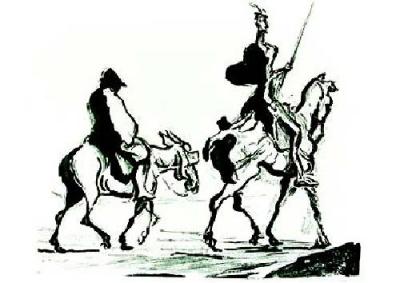
In this chapter, I felt as though I was drawing a bit of a parallel between Robert Cohn and everyone's favorite Spanish windmill slayer, The Ingenious Hidalgo Don Quixote of La Mancha. One should not be allowed to switch between English and Spanish that many times within a name, but that's beside the point. Anyway, the reason I say the two are kind of similar is that whole concept of outdated knightly chivalry. Cohn asks Jake about the Lady Brett Ashley, and when Jake only answers with negative qualities, "She's a drunk...She's [married someone she didn't love] twice..." (p. 46-47), Cohn gets all worked up in a tizzy, saying "I didn't ask you to insult her" (p. 47). He seems to cling to that old-timey chivalrous notion that women belong on pedestals. SeƱor Quixote also gets extremely worked up when some traders from Toledo "insult" his beloved Dulcinea, who he also seems to have "placed on a pedestal." It is in fact Cohn's outdated sense of values and chivalry that seems to set him apart from the rest of the Lost Generation depicted in this novel, and this old-fashioned behavior gives the other members of the Barnes gang only more ammunition to ridicule the poor fellow who was set apart from the very beginning.
This is Don Quixote. He respects women, but hates windmills.
Tuesday, August 10, 2010
Four - Lady Brett Ashley
Apparently, Brett and Jake are madly in love. Except that Jake can't have sex, and Brett doesn't love him enough to give up on having sex forever. Love is a strange and terrifying concept. Anyway, Brett's fixation on sexual relations seems to be her own special way of coping with her life's lack of direction. She likes to run around and have lots of meaningless intercourse, and it makes her feel like her life has meaning, but in reality, she recognizes that this behavior isn't fulfilling at all, and in reality, she's "been so miserable" (p. 32). So this looks like another case of people trying to physically "move" away from their problems. First we had Cohn who wanted to move to South America, and then there was Jake who constantly hops from bar to bar, and now there's Brett who jumps from significant male other to the next. This sense of "movement" seems to be a recurring idea throughout the novel. That's a motif, yeah?...yeah. Furthermore, it appears that Brett's very presence seems to frustrate Jake, as is seen on page 38: "To hell with Brett. To hell with you, Lady Ashley." She seems to serve as a constant reminder to Jake that he just can't do the nasty like he once could.
Perhaps it's just the vicodin talking, but I really could not come up with a relevant picture.
Edit: I'm not actually a vicodin addict; I got my wisdom teeth pulled two days ago.
Three - Clubbin'
Jake hits the bars and picks up a hooker named Georgette. I was almost appalled at our lovely protagonists apparent loose morals, until later when it becomes apparent that he does not plan to have relations with this lovely lady, as he got his hoohoo-dilly blown off in the war (blatant paraphrasing). Naturally, this fact is not expressed immediately outright, but throughout the course of the novel it is hinted at. Therefore, Jake is unable to partake in sexual relations with the aforementioned harlot or any other future prominent female characters (hint hint). This apparent impotence of Jake's brings forth yet another prominent theme in the novel: masculinity, or rather a sense of a lack thereof as a result of the war. Hemingway is essentially saying that many of the members of the Lost Generation came out of the war with extremely confused senses of what is "manly." The previous notions of charging into battle with banner waving in a tremendous bout of righteous macho fury were completely swept aside as trench warfare made such daring escapades impractical. The people who stood up bravely to charge ahead ended up getting ripped apart by machine guns. Acts of courage, honor, and bravery generally ended in a swift demise. Those that managed to get through alive just kept their heads down and tried not to get shot or blown apart by a mortar. This of course leaves the Lost Generation with a feeling that the only truly masculine soldiers got blown away while the sissies took cover and made it out in one piece. Mostly. This entire sense is embodied in Jake's own insecurity concerning his wound. This recurring theme of emasculation resurfaces throughout the course of the novel as strong women show off independence or exhibit control over other leading male characters, as was shown in the exchange between Cohn and Frances over the trip to Strasbourg.
This is an authentic WWI machine gun. It is the bane of masculinity.
Two - Would You Like to go to South America?
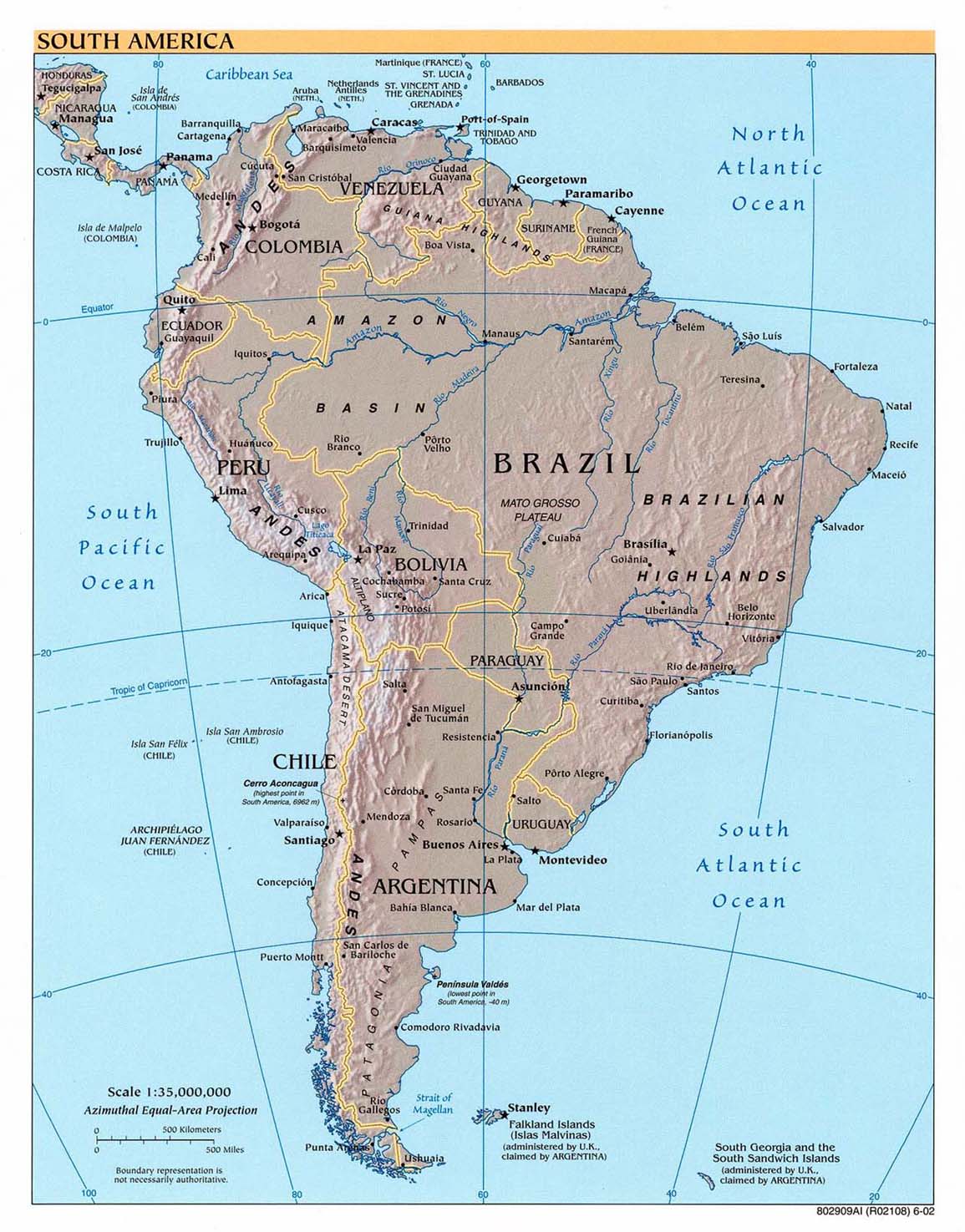
This line is a bit of a random conversation starter. Should a person ever walk up to me and boldly ask this with little to no build up or explanation, I would be fairly taken-aback. Apparently, nothing catches Jake Barnes off-guard. Anyway, Cohn appears to have a brief mid-life crisis, in which he feels absolutely sure that he's not living life up to the fullest, and thus decides that he wants to go to South America, and everything will be okay. This is one of the common ways that people in the novel seek to find fulfillment in their lives: travel. Whether it's moving from bar to bar, or from country to country, the members of the Lost Generation often try to leave their problems behind by actually physically moving. However, Jake responds with the lovely quote: "You can't get away from yourself by moving from one place to another" (p. 19). Jake is essentially saying that the problems that Cohn faces are due to his lifestyle, like his outdated values and morals, and that changing location will not make these problems go away. This chapter also shows a particular recurring quality of Jake's: oftentimes he shows quite the impressive insight in pointing out a problem, typically of those facing the Lost Generation, yet he oftentimes falls short of actually offering a solution.
One - Robert Cohn
Robert Cohn is the first member of The Barnes Crew that is mentioned in this novel. In this tiny slice of a chapter, we receive great insight into the life and mind of Mr. Cohn. We learn that he's a shy little Jewish boy who has gotten used to being picked on and made fun of, and has simply learned to just take it for the most part. He generally doesn't seem to stand up for himself, as is seen on page 14 where he declares that any trip involving a lady other than Frances and "I couldn't go, that would be all." He appears to be afraid of confrontation, which probably stems from the fact that he's one of the only members of The Barnes Crew that was not involved in World War One. Furthermore, we learn that Cohn is a writer, which only further enforces my theory that all writers everywhere like to write about writers more than any other profession. Just think about it. And lastly, and possibly most importantly, we learn that "Robert Cohn was once middleweight boxing champion of Princeton" (p. 11). I think this fact is particularly important because it's mildly ironic. Throughout the course of the novel, we see Cohn take on the role of a punching bag, rather than that of the one doling out the punches. Cohn is the focus of countless verbal attacks and insults and (generally) never fights back. Rather than being shown as the big bad boxing brute (unintentional alliteration), he just gets picked on, over and over.
Zero - The Lost Generation
"Bryan, you can't start a blog series off with Zero. One would be okay, and Twenty-One would be acceptable as a continuation of the last twenty. But no, you can't start over at zero."
"Mr. Strawman, you may blame Hemingway for writing a novel with exactly 19 chapters. How am I supposed to evenly divide that into 20? And thusly I shall start this blogging adventure off with blog zero, which does not correspond to any single chapter, but is more of a conglomeration of things that helped me understand the novel as a whole (because after read-through number two, I was still lost). Furthermore, this way, blog post number 1 can correspond with chapter 1, and post 2 with chapter 2, all the way until we end our blogging adventure. So Mr. Strawman, if my simplicity just happens to be unacceptable to you, frankly this is my blog and I do what I want."
So without further ado, what in God's name is the "Lost Generation"?
A: "The "Lost Generation" is a term used to define expatriate artists and writers living in Paris after the end of World War I."
Thanks Wikipedia! (http://en.wikipedia.org/wiki/Lost_Generation) So then what's an expatriate?
A: "An expatriate (in abbreviated form, expat) is a person temporarily or permanently residing in a country and culture other than that of the person's upbringing or legal residence.
Good Golly Gosh, Wikipedia! (http://en.wikipedia.org/wiki/Expatriate) So what you're saying is that this entire novel, The Sun Also Rises, by Ernest Hemingway, is ultimately an illustration of various people like Jake Barnes, Lady Brett Ashley, and their various friends and associates who struggle to cope in a world after The Great War, in which their original values of love, romance, honor, and respect have been shattered by the horrors of war, and they all attempt to deal with this aimlessness through various mediums, such as sexual promiscuity, alcoholism, and gambling?
A: "um..."
Thanks Wikipedia, this has been most enlightening. In reality I reached this conclusion right around chapter nine I believe, when I stood up, shook my fists at the ceiling, and rightly declared "This book isn't about anything!!!" Shortly thereafter, I decided that Hemingway is a rather intelligent fellow, and if his book seems to be about nothing, well he probably wants it to be about nothing. Like Seinfeld, except less funny. Anyway, I tried to come up with reasons why his book doesn't seem to go anywhere, and after a bit of research about the Lost Generation alluded to on the back cover, I came to the aforementioned explanation. The book is about nothing, because the characters' lives are about nothing; they simply hop around from bar to bar, or from man to man, not really living their lives, but just simply existing. I suppose I'll go more in-depth with each individual character's aimless life as they appear throughout the course of the novel, so for now I shall simply declare the aimlessness of The Lost Generation to be the overarching theme of this entire novel. Theme? I do declare, that's another literary term. Chalk one up for Bryan F. Cary. Furthermore, this theme reminds me of a song, "The Good Life," by Three Days Grace; you can find it over there, on the left. Anyway, I'll see you all in chapter 1.
"Mr. Strawman, you may blame Hemingway for writing a novel with exactly 19 chapters. How am I supposed to evenly divide that into 20? And thusly I shall start this blogging adventure off with blog zero, which does not correspond to any single chapter, but is more of a conglomeration of things that helped me understand the novel as a whole (because after read-through number two, I was still lost). Furthermore, this way, blog post number 1 can correspond with chapter 1, and post 2 with chapter 2, all the way until we end our blogging adventure. So Mr. Strawman, if my simplicity just happens to be unacceptable to you, frankly this is my blog and I do what I want."
So without further ado, what in God's name is the "Lost Generation"?
A: "The "Lost Generation" is a term used to define expatriate artists and writers living in Paris after the end of World War I."
Thanks Wikipedia! (http://en.wikipedia.org/wiki/Lost_Generation) So then what's an expatriate?
A: "An expatriate (in abbreviated form, expat) is a person temporarily or permanently residing in a country and culture other than that of the person's upbringing or legal residence.
Good Golly Gosh, Wikipedia! (http://en.wikipedia.org/wiki/Expatriate) So what you're saying is that this entire novel, The Sun Also Rises, by Ernest Hemingway, is ultimately an illustration of various people like Jake Barnes, Lady Brett Ashley, and their various friends and associates who struggle to cope in a world after The Great War, in which their original values of love, romance, honor, and respect have been shattered by the horrors of war, and they all attempt to deal with this aimlessness through various mediums, such as sexual promiscuity, alcoholism, and gambling?
A: "um..."
Thanks Wikipedia, this has been most enlightening. In reality I reached this conclusion right around chapter nine I believe, when I stood up, shook my fists at the ceiling, and rightly declared "This book isn't about anything!!!" Shortly thereafter, I decided that Hemingway is a rather intelligent fellow, and if his book seems to be about nothing, well he probably wants it to be about nothing. Like Seinfeld, except less funny. Anyway, I tried to come up with reasons why his book doesn't seem to go anywhere, and after a bit of research about the Lost Generation alluded to on the back cover, I came to the aforementioned explanation. The book is about nothing, because the characters' lives are about nothing; they simply hop around from bar to bar, or from man to man, not really living their lives, but just simply existing. I suppose I'll go more in-depth with each individual character's aimless life as they appear throughout the course of the novel, so for now I shall simply declare the aimlessness of The Lost Generation to be the overarching theme of this entire novel. Theme? I do declare, that's another literary term. Chalk one up for Bryan F. Cary. Furthermore, this theme reminds me of a song, "The Good Life," by Three Days Grace; you can find it over there, on the left. Anyway, I'll see you all in chapter 1.
Labels:
Seinfeld,
Strawman,
The Lost Generation,
Theme,
Wikipedia
Subscribe to:
Posts (Atom)