

"I had saved a human being from destruction, and as a recompense I now writhed under the miserable pain of a wound which shattered the flesh and bone." p. 135
Well I must say, I've spent quite a long time discussing our good friend Victor, but I've really neglected to say much about the characterization of everyone's favorite sterotypical Italian plumber. Or monster. Either way, really, I am of course speaking of Mario.
Mario starts off as a baby, essentially, as shown by the way in which he reaches out to Victor, his father figure, and slaps on a goofy baby grin. This, of course, is terrifying to Victor, but really he just wants some love. However, this initially rejection just starts a long cycle of repeated instances of Mario saying "lovemelovemelovemelovemeloveme" and everyone else just beating him with sticks. Yeowch. So he goes out into the wild, and at some point, he enters a town to talk with people, at which time he is first beaten with said sticks and run right out of town. So you'd think he'd be pretty bummed, at this point, but don't worry, Mario is still but an innocent child at heart, and he is confident that someday he'll find people who will accept him. So he decides to befriend the DeLaceys while under the impression that the decency he's observed before will make them treat him compassionately. However, one lady faints, one lady flees, and guess what Felix does! He beats him with a stick. So Mario runs off again, and now he's starting to get a little ticked, so he burns down the abandoned DeLacey cottage and takes off into the wilderness, at which time, he finds a lady drowning in the river. Now, Mario's been treated like crap thus far, so it certainly would have been expected of the big guy to just keep on walking and not help her out. But rather, he goes out of his way, saves her life, begins to resuscitate her, and how is he thanked? If you answered that he's beaten with a stick, you'd actually be wrong. Nahh, he gets shot. Poor fella. So that is essentially the last straw. Mario flips out and begins his killing spree, ultimately leading up to his murder of Elizabeth and the death of Victor, and eventually Mario himself.
So that might have seemed like a lot of plot summary, but I feel that really it's the best way to represent Mario's progression as a character. He starts off innocent like a child, but the world just hates him. However, he does not begin to give up on humanity until his encounter with the DeLaceys. But even after that, he is still a good and decent critter, not even close to being worthy of the title "monster." However, his last decent act is repaid with hatred, and he just quits. Ultimately this is the outline of his transition from a fairly human-like character to a totally brutal and bloodthirsty monster.
Showing posts with label Love. Show all posts
Showing posts with label Love. Show all posts
Thursday, April 21, 2011

Wednesday, April 6, 2011
1984 - The End
"He had one the victory over himself. He loved Big Brother." p. 298
Winston loses. The Party wins. Darn. So then what ultimately causes his conversion? Well, there are a number of things. First off, O'Brien is responsible. He is able to wear him down over time. Winston perceives him as extremely intelligent, far smarter than himself, with impeccable logic. The torture doesn't really cause the conversion, although it does help set O'Brien up. It wears him down mentally and physically, but ultimately O'Brien's demeanor is what changes him in the end. Because Winston views him as such a mental giant, he finds it necessary to adhere to what he says. He begins practicing this rejection of reality even before room 101. However, room 101 helps push him over the edge. His total betrayal of Julia finally severs the one tie that could possibly have made him human. That personal connection he had with Julia was powerful enough to challenge the loyalty that The Party wants him to have towards Big Brother. Thus, by severing that connection, The Party ensures that Winston has only enough room for loving the big guy and no one else. However, even after he is released to the world, he is not fully brainwashed. He still has his own private thought, a memory of a happy day that he had with his mother when he was still just a child. He later dismisses this as a false memory; however, he does still remember it, thus showing that he's not quite fully converted to the Party doctrine. However, the finally straw that breaks the back of this metaphorical camel is the military victory over the Eurasian Army in Africa. Winston views Big Brother as "The colossus that bestrode the world! The rock against which the hordes of Asia dashed themselves in vain!" He views Big Brother as his ultimate protector, and finally is able to love him. He curses his own self-willed attempts to reject the Party and Big Brother and finally embraces him with love.
So my reaction? Well, it's a sad, depressing ending, but it's the only possible ending that really holds true to the theme of the book. There are no heroes, not even Winston. Even after his struggle, he finally gives in. It really is hopeless, which is kind of a downer, but at least this couldn't possibly happen in real life, right?
...
...
...Right?
Winston loses. The Party wins. Darn. So then what ultimately causes his conversion? Well, there are a number of things. First off, O'Brien is responsible. He is able to wear him down over time. Winston perceives him as extremely intelligent, far smarter than himself, with impeccable logic. The torture doesn't really cause the conversion, although it does help set O'Brien up. It wears him down mentally and physically, but ultimately O'Brien's demeanor is what changes him in the end. Because Winston views him as such a mental giant, he finds it necessary to adhere to what he says. He begins practicing this rejection of reality even before room 101. However, room 101 helps push him over the edge. His total betrayal of Julia finally severs the one tie that could possibly have made him human. That personal connection he had with Julia was powerful enough to challenge the loyalty that The Party wants him to have towards Big Brother. Thus, by severing that connection, The Party ensures that Winston has only enough room for loving the big guy and no one else. However, even after he is released to the world, he is not fully brainwashed. He still has his own private thought, a memory of a happy day that he had with his mother when he was still just a child. He later dismisses this as a false memory; however, he does still remember it, thus showing that he's not quite fully converted to the Party doctrine. However, the finally straw that breaks the back of this metaphorical camel is the military victory over the Eurasian Army in Africa. Winston views Big Brother as "The colossus that bestrode the world! The rock against which the hordes of Asia dashed themselves in vain!" He views Big Brother as his ultimate protector, and finally is able to love him. He curses his own self-willed attempts to reject the Party and Big Brother and finally embraces him with love.
So my reaction? Well, it's a sad, depressing ending, but it's the only possible ending that really holds true to the theme of the book. There are no heroes, not even Winston. Even after his struggle, he finally gives in. It really is hopeless, which is kind of a downer, but at least this couldn't possibly happen in real life, right?
...
...
...Right?
Thursday, October 14, 2010
That Time of Year
I do declare, this is a Shakespearean Sonnet, which is a fancy term for a poem consisting of the quatrains which present an example with a final couplet as a conclusion, following the rhyme scheme ABAB CDCD EFEF GG. In this poem, each quatrain presents a different metaphorical way of saying essentially the same thing. The first refers to the trees during autumn. They once were green and full of life, but now they are fading, and have only yellow leaves, or none at all. In the second quatrain, twilight is mentioned, the time when day finally gives way to night, light finally giving in to darkness. Lastly, there is the image of a dying fire, which has burned up all it fuel and is just smoldering, about to die. All three of these images pertain to the end of something, whether it's the end of a season as summer gives way to fall, or the end of a day as light gives way to darkness, or the end of a fire, as it begins to finally burn out. The speaker is ultimately saying that all things come to an end. This is taken deeper in that last couplet, of course. The speaker states that like all things, love too must end. However, he also states that this end does not detract from the love itself, but rather makes it stronger. He states that it is far more powerful to love something that one must soon lose. The very fleeting nature of life and love is what makes it so precious.

I always do really irresponsible things whenever I am around bonfires.
Taking unnecessary risks also makes life precious.

I always do really irresponsible things whenever I am around bonfires.
Taking unnecessary risks also makes life precious.
Thursday, September 30, 2010
To his Coy Mistress
Is this poem about time or love? Well I suppose it's about both. The first stanza proposes a hypothetical ideal situation. The speaker essentially says that if the had all the world and all the time, her coyness would not bother him. And he would still love her, even for hundreds of thousands of years. However, the next stanza shifts to realism. They do not have all the time in the world. In fact, they have a very small glimpse of time before they die. And so he asks his lady friend not to be so coy. They don't have all the time in the world, so really there isn't time to be coy. So...what is "coy" exactly...? Bluntly, it means that his ladyfriend doesn't want to Have Relations. This sort of kills that romantic element of the poem. He starts off all lovely, "Oh baby, I'd love you forever if I had forever to spend." and then shifts to "But I can't, so let's bump uglies instead, and love each other that way." Writing prettily does not change the fact that he ultimately has the relationship maturity of a seventeen year old guy.
Thursday, September 23, 2010
Sorting Laundry
I laughed obnoxiously when I read the title "Sorting Laundry." The poem itself wasn't as bad as I thought, at least. There was at least some higher meaning to it. I was really worried I was going to waste several minutes of my life reading about a poem literally just about sorting ones laundry. In reality, the laundry sorting process represents the thinking process of a person contemplating their relationship with a significant other. The pillowcases remind the speaker of the dreams she and her lover share together. The gaudy towels represent the knick-knacks they pick up over the years that serve no real purpose but remind them of a fond memory involving the two. The regular shirts and skirts and pants remind the speaker of the simple daily life that they share that ordinarily would be monotonous, but are made fantastic due to the involvement of the aforementioned significant other, who I will henceforth refer to as "husband," because the previous name is too long. The wrinkles in the clothes represent the flaws that the two lovebirds see in the other that they have grown to love, and thus ignore and don't "iron out." The socks represent the various mysteries of love, as nobody can every solve the mystery of where the socks all go. The random items found in the laundry represent the many random fond memories that the two share. The dollar bills that are intact, despite agitation, represent their relationship, which has stayed strong, despite potentially rough patches. And thus the poem concludes with the statement finally saying that should the husband leave the speaker, a mountain of unsorted wash could not fill the empty side of the bed, essentially meaning that all the fun things mentioned previously would mean nothing without the husband to complete everything. D'awww....
 The Lost Socks have clearly been stolen by these Underpants Gnomes, who have apparently expanded their business model to include hosiery.
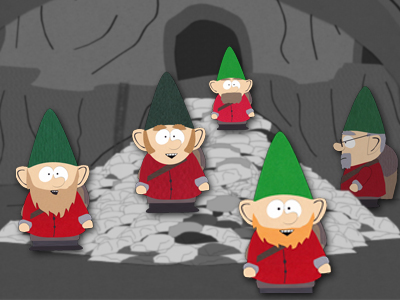 The Lost Socks have clearly been stolen by these Underpants Gnomes, who have apparently expanded their business model to include hosiery.
Thursday, September 9, 2010
Those Winter Sundays
I looked up the meaning of the word "Office" on Wiktionary. I think the one that is being used in this case happens to be the only obsolete meaning: a task that one feels obliged to do. Using obsolete definitions of words is against the rules, Mr. Robert Hayden, even if you were born almost 100 years ago. Anyway, this poem made me a little sad....The dad seems like quite the lovely chap, warming up the house for the whole family and polishing shoes and whatnot. However, the son/speaker of the poem doesn't really care for him all too much. He speaks to him indifferently and doesn't really like him. There are pretty much two explanations for this. On the one hand, maybe the father did all these things because they were offices, a task he feels obliged to do, but that was the only reason why he did it, not out of love, but obligation, and therefore the son feels as though the father doesn't love him. The other (and I personally think more likely) is that the father was unable to show him direct love, like spending time with him and cutting the crust off his PB&J sandwiches, simply because he was off "driving out the cold," which I think represents the hard manual labor that the father had to do every day to make a living for his family. The son wasn't able to recognize this as love because it took place far away from him. However, looking back on it later in life (because the poem is in past tense, see?), as an adult, he's able to recognize it for love.

This is how people kept from losing digits to frostbite before central heating was invented

This is how people kept from losing digits to frostbite before central heating was invented
Subscribe to:
Posts (Atom)