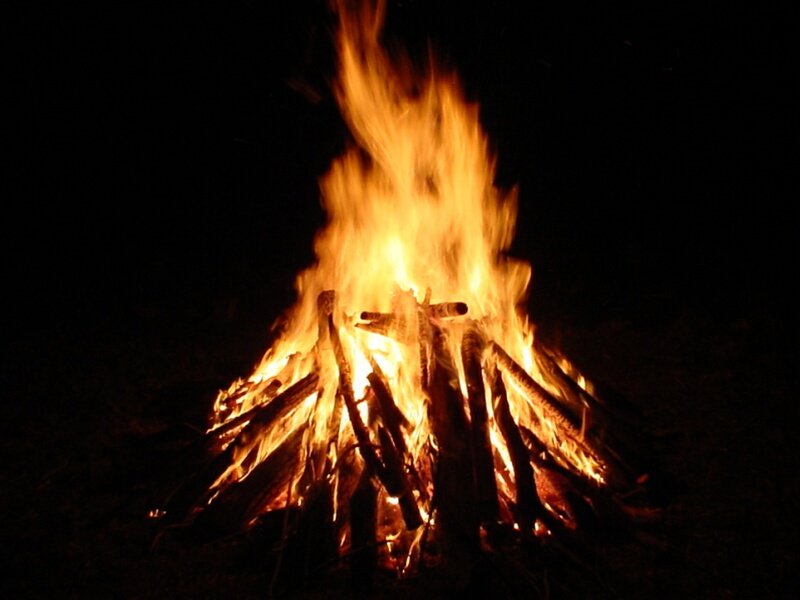
I do declare, this is a Shakespearean Sonnet, which is a fancy term for a poem consisting of the quatrains which present an example with a final couplet as a conclusion, following the rhyme scheme ABAB CDCD EFEF GG. In this poem, each quatrain presents a different metaphorical way of saying essentially the same thing. The first refers to the trees during autumn. They once were green and full of life, but now they are fading, and have only yellow leaves, or none at all. In the second quatrain, twilight is mentioned, the time when day finally gives way to night, light finally giving in to darkness. Lastly, there is the image of a dying fire, which has burned up all it fuel and is just smoldering, about to die. All three of these images pertain to the end of something, whether it's the end of a season as summer gives way to fall, or the end of a day as light gives way to darkness, or the end of a fire, as it begins to finally burn out. The speaker is ultimately saying that all things come to an end. This is taken deeper in that last couplet, of course. The speaker states that like all things, love too must end. However, he also states that this end does not detract from the love itself, but rather makes it stronger. He states that it is far more powerful to love something that one must soon lose. The very fleeting nature of life and love is what makes it so precious.
Showing posts with label Sonnet. Show all posts
Thursday, October 14, 2010
Death Be Not Proud
Oh hey, I didn't leave any slightly-related pictures on any of those last four posts. I'll have to remedy that.
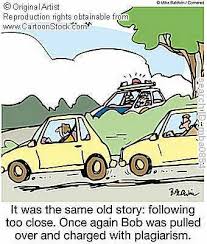
Also, the first two lines of this poem were totally stolen from the song "Follow the Reaper" by Children of Bodom. Someone should alert the Plagiarism Police before this John Donne fellow strikes again. If that is his real name.
The rhyme scheme of this poem is ABBAABBACDDCAE. That last line is wrong, just wrong. However, this allows me to discuss the pattern and/or structure of the poem, thus answering question 17. This poem is a sonnet; the 14 line-ness is a bit of a tip-off. And thus, the first eight lines go together, which makes sense, because they all rhyme with each other and make reference to a Swedish pop music group (abba, get it?). These first eight lines address Death, and tell him to hop right off his pedestal. Many people say that Death is frightening or powerful, but the speaker asserts that this is quite untrue. He states that Death lacks the power to ever truly kill anyone, implying that there may just be something beyond it. Furthermore, he declares that Death is in fact a pleasant experience, as rest and sleep are just brief glimpses of Death, and thus Death must be just as relaxing and enjoyable as sleep.
The last six lines, therefore, offer a new idea: the ultimate destruction of Death. The speaker reinforces that Death has no real power by saying that it is subject to the will of fate, chance, kings, and desperate men. He essentially says "Death doesn't kill people, people kill people!" Then he says that we don't even need Death to bring peace. We've got poppy and charms, which I'm about 93% sure is a reference to opium. Nice. And then the speaker closes with the last two lines, stating that after the short sleep, a.k.a. Death, has passed, we are free from Death, able to live eternally, and then Death itself shall be vanquished.
Also, the first two lines of this poem were totally stolen from the song "Follow the Reaper" by Children of Bodom. Someone should alert the Plagiarism Police before this John Donne fellow strikes again. If that is his real name.
The rhyme scheme of this poem is ABBAABBACDDCAE. That last line is wrong, just wrong. However, this allows me to discuss the pattern and/or structure of the poem, thus answering question 17. This poem is a sonnet; the 14 line-ness is a bit of a tip-off. And thus, the first eight lines go together, which makes sense, because they all rhyme with each other and make reference to a Swedish pop music group (abba, get it?). These first eight lines address Death, and tell him to hop right off his pedestal. Many people say that Death is frightening or powerful, but the speaker asserts that this is quite untrue. He states that Death lacks the power to ever truly kill anyone, implying that there may just be something beyond it. Furthermore, he declares that Death is in fact a pleasant experience, as rest and sleep are just brief glimpses of Death, and thus Death must be just as relaxing and enjoyable as sleep.
The last six lines, therefore, offer a new idea: the ultimate destruction of Death. The speaker reinforces that Death has no real power by saying that it is subject to the will of fate, chance, kings, and desperate men. He essentially says "Death doesn't kill people, people kill people!" Then he says that we don't even need Death to bring peace. We've got poppy and charms, which I'm about 93% sure is a reference to opium. Nice. And then the speaker closes with the last two lines, stating that after the short sleep, a.k.a. Death, has passed, we are free from Death, able to live eternally, and then Death itself shall be vanquished.
Labels:
Children of Bodom,
Death,
John Donne,
Opium,
Plagiarism,
Sonnet
Thursday, September 30, 2010
My Mistress' Eyes
This little sonnet is intriguing in that it rages against the common structure of a typical sonnet of its day. The central purpose of the poem (Question 6), in fact, is to satirize these other sonnetsthat write so prettily, but are honestly just dishonest. Therefore, Shakespeare counters with a completely and fully honest poem. Where others would have said "My love, your eyes rage like the Aegean," or "My beloved, a thousand suns could not outshine the light in your eyes," Shakespeare simply notes "My mistress' eyes are nothing like the sun." This general premise continues throughout the course of the poem, essentially creating a general tone or feeling of simple honesty. The last line then delivers the crushing blow to the other sonnet writers with his last thought "I think my love as beautiful as any she belied with false compare." Shakespeare finally closes, and pretty much saves his own neck, by saying that even though he refuses to lie, his lady friend is still just as beautiful as any who is lied to.
Thursday, September 16, 2010
Bright Star
I'll be addressing question 17 with this particular blog. The particular form and structure of this poem is referred to as a "sonnet." It is a fourteen line poem divided into two chunks: a six-line piece and an eight-line piece. The rhyme scheme goes A-B-A-B-C-D-C-D-E-F-E-F-G-G, the typical rhyming pattern of a sonnet, and it helps to reinforce the structure. Essentially, the structure is set up so that the first six lines set forth a general idea. The speaker starts by stating that he wishes to be as steadfast as the star, but for the rest of the section, he describes the various qualities of a star that he doesn't want to have, such as distance and loneliness. The next eight lines reinforce this concept by applying the qualities he wants to his own life, referring to how he wishes to be with his love forever. The structure of this poem is essential to conveying the message. The very nature of the sonnet easily allows the reader to divide the poem into the two separate pieces. Therefore the reader is able to see the clear shift in the poem from the first six lines of apostrophe to the last eight lines of his own application of the star's qualities to his own life. The structure of the poem provides this division, making the ultimate meaning very clear to discern.

This is a structure.
Subscribe to:
Posts (Atom)