Thursday, October 14, 2010

That Time of Year

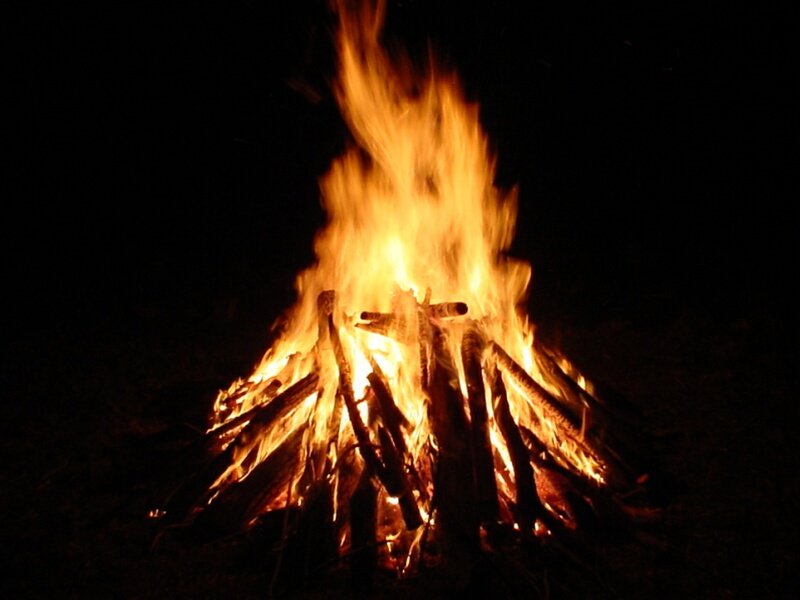
I do declare, this is a Shakespearean Sonnet, which is a fancy term for a poem consisting of the quatrains which present an example with a final couplet as a conclusion, following the rhyme scheme ABAB CDCD EFEF GG. In this poem, each quatrain presents a different metaphorical way of saying essentially the same thing. The first refers to the trees during autumn. They once were green and full of life, but now they are fading, and have only yellow leaves, or none at all. In the second quatrain, twilight is mentioned, the time when day finally gives way to night, light finally giving in to darkness. Lastly, there is the image of a dying fire, which has burned up all it fuel and is just smoldering, about to die. All three of these images pertain to the end of something, whether it's the end of a season as summer gives way to fall, or the end of a day as light gives way to darkness, or the end of a fire, as it begins to finally burn out. The speaker is ultimately saying that all things come to an end. This is taken deeper in that last couplet, of course. The speaker states that like all things, love too must end. However, he also states that this end does not detract from the love itself, but rather makes it stronger. He states that it is far more powerful to love something that one must soon lose. The very fleeting nature of life and love is what makes it so precious.

I always do really irresponsible things whenever I am around bonfires.
Taking unnecessary risks also makes life precious.

Elegy for my Father who is not Dead

The central purpose (question 6) of this poem is to contrast two possible concepts of death and the possibility of a life after. First, there is the father, who takes an optimistic approach to this entire concept. He is fully prepared to die. This stems from his belief that there is an afterlife where he will see his son and all of his loved ones. Therefore, he has the mentality that this current life is not all that there is, and he has no trouble letting go of it. He is sure that he will see his son again after he, too, passes away, which is evident from the boat analogy. The father will be there to welcome his son, just as the son was there to send off the father. However, the son takes a different approach. He is not at all ready to lose his father. This stems from his own belief that there is not anything after life, or at least not an afterlife that involves a reunion of friends and family. Rather, he views death as the end all be all, the final curtain, end of the line, [insert cliché here]. He is not ready for his father's life to end, because he believes that life is all there is to existence, and once it's over, one ceases to exist. This is evident in his belief of the ship analogy, in that the ship does not reach some nice pleasant shore, but simply sinks, and is no more. This contrast between the father's views and the son's views ultimately serves to contrast the afterlife concept of most major religions with the world-based view of atheism.

But more importantly, "End of the Line" is totally a Metallica song, and I'd say it's about time we put them up on that playlist.
Metallica ruuules

Lonely Hearts

I refuse, yes refuse, to mention a certain spicy military official or his band. Instead, here's an Awesome Face:
Okay, let's move on. I shall address question 17 with this poem as well, which is probably not allowed, but it seems far too perfect to pass up. The pattern of this poem is a Villanelle, which is a very intriguing style of poem, in that it relies heavily on repetition. Two lines, the first and the third, are repeated frequently throughout. Rhyme is also an important part of this form. The rhyme scheme is ABA ABA ABA ABA ABA ABAA. Now, why is this so important? Usually I dismiss things like rhyme, meter, and structure as silly frills that subconsciously cause people to end their thoughts at the end of every line. However, that repetition I mentioned earlier plays a crucial role in the poem. Each stanza ends in one of two lines "Can someone make my simple wish come true?" or "Do you live in North London? Is it you?" However, each stanza is spoken by a different person, from a gay vegetarian to a biker dude, to a pretty Jewish single mom. However, they all share the same two lines. This has two effects. First, it shows the universality of loneliness. Whether they're an artsy bi-curious young lady or an inexperienced Libran, everyone understands loneliness, which is evident from the lines they have in common. Second, it displays the universality of a desire to conquer this loneliness by seeking out a like-minded individual with which to hang out and maybe have dinner once in a while. However, there's also a bit of a satirical tone lying underneath. All of the people want to find this person to take away their loneliness, but none of them ask for anything concerning the personality. They don't wish to connect on a personal level, but rather, most of them are predominantly concerned with sex. This is taking a stab at society and relationships in which people value sex over a real personal connection. Either way, personal ads are weird, and lonely people are awkward.
Intelligent and sensitive AP Literature student seeking a companion with an interest in Heavy Metal and Stephen King novels. And yes, I really am that glisteny.
Death Be Not Proud

Oh hey, I didn't leave any slightly-related pictures on any of those last four posts. I'll have to remedy that.

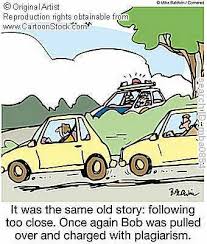
Also, the first two lines of this poem were totally stolen from the song "Follow the Reaper" by Children of Bodom. Someone should alert the Plagiarism Police before this John Donne fellow strikes again. If that is his real name.

The rhyme scheme of this poem is ABBAABBACDDCAE. That last line is wrong, just wrong. However, this allows me to discuss the pattern and/or structure of the poem, thus answering question 17. This poem is a sonnet; the 14 line-ness is a bit of a tip-off. And thus, the first eight lines go together, which makes sense, because they all rhyme with each other and make reference to a Swedish pop music group (abba, get it?). These first eight lines address Death, and tell him to hop right off his pedestal. Many people say that Death is frightening or powerful, but the speaker asserts that this is quite untrue. He states that Death lacks the power to ever truly kill anyone, implying that there may just be something beyond it. Furthermore, he declares that Death is in fact a pleasant experience, as rest and sleep are just brief glimpses of Death, and thus Death must be just as relaxing and enjoyable as sleep.

The last six lines, therefore, offer a new idea: the ultimate destruction of Death. The speaker reinforces that Death has no real power by saying that it is subject to the will of fate, chance, kings, and desperate men. He essentially says "Death doesn't kill people, people kill people!" Then he says that we don't even need Death to bring peace. We've got poppy and charms, which I'm about 93% sure is a reference to opium. Nice. And then the speaker closes with the last two lines, stating that after the short sleep, a.k.a. Death, has passed, we are free from Death, able to live eternally, and then Death itself shall be vanquished.

Dang Plagiarism Police...always trying to keep a brother down

Thursday, September 30, 2010

To his Coy Mistress

Is this poem about time or love? Well I suppose it's about both. The first stanza proposes a hypothetical ideal situation. The speaker essentially says that if the had all the world and all the time, her coyness would not bother him. And he would still love her, even for hundreds of thousands of years. However, the next stanza shifts to realism. They do not have all the time in the world. In fact, they have a very small glimpse of time before they die. And so he asks his lady friend not to be so coy. They don't have all the time in the world, so really there isn't time to be coy. So...what is "coy" exactly...? Bluntly, it means that his ladyfriend doesn't want to Have Relations. This sort of kills that romantic element of the poem. He starts off all lovely, "Oh baby, I'd love you forever if I had forever to spend." and then shifts to "But I can't, so let's bump uglies instead, and love each other that way." Writing prettily does not change the fact that he ultimately has the relationship maturity of a seventeen year old guy.

Dover Beach

Now at some point I'll have to put Cliffs of Dover on my playlist. Awesome.

This poem is all about faith, or essentially a lack thereof. This is brought about through a depiction of the ocean ebbing and flowing onto the beach like waves. The speaker relates this surging back and forth motion to a sense of longing for something. The sense of faith is then brought out through the line "The Sea of Faith was once, too, at the full. The speaker is basically saying that the world was once full of faith, this sea had no sense of longing, because it was full and had no room to ebb or flow. The ocean had no longing because the world was run by faith. Now, however, the speaker notes that the sea has emptied a bit, and now there is only a longing to fill it once again with the faith the world once had. In this poem, the pebbles represent the people of the world. Because of the lack of faith, there is no stability or foundation: the pebbles simply sway back and forth due to their lack of faith. However, when the Sea of Faith was full, there was no ebb, and the pebbles were stable and strong. The speaker ultimately wants the world to return to how it once was.

Crossing the Bar

This poem, yet another in the long line of poems about dying, evokes a particularly strong tone (Question 8). First, the speaker makes clear his metaphor between crossing a sandbar and dying with the line "may there be no moaning of the bar when I put out to sea." The speaker here is requesting that nobody cry or mourn his passing, thus giving the general impression that the speaker is not upset about his death, but rather views it as a happy occasion, and doesn't want anyone else to mourn his death. This point is reinforced by the line "May there be no sadness of farewell when I embark." However, the poem takes on a deeper tone with the line "When that which drew from out the boundless deep turns again home." The speaker adds a bit of a religious element to his attitued by essentially stating that the afterlife is his true home, and that he is only returning to where he belongs. Yet another line to reinforce this religious attitude is "I hope to see my Pilot face to face when I have crossed the bar." The term "hope" in this line could have a potentially ambiguous meaning, but because of the strongly established tone of religiously-based optimism, the word takes on the very clear meaning of strong desire. The speaker does not just view death in a positive light, but it is his ultimate desire. He wants, above all else, to return home and see God.
I like sailing....